Fuchs:
the forged wheel that shaped Porsche’s identity
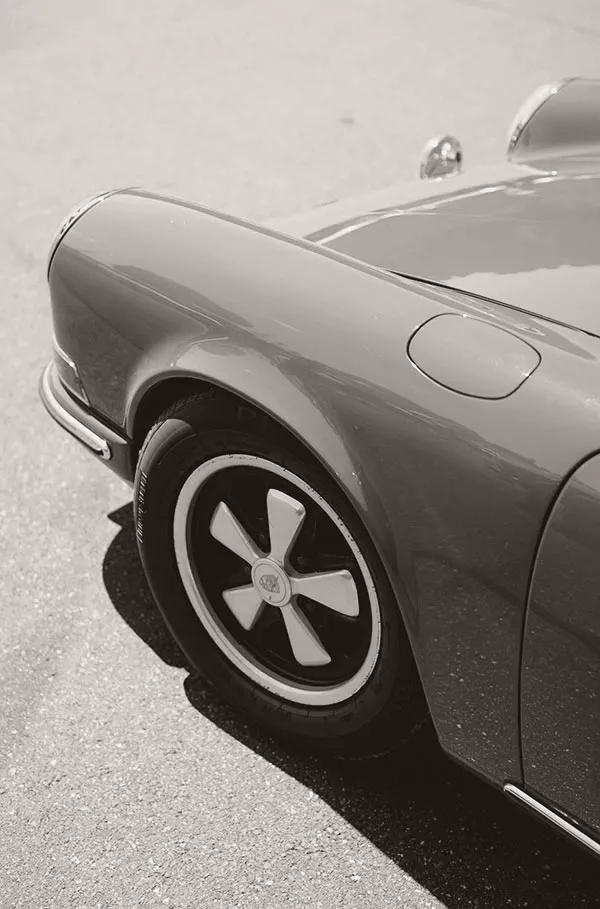
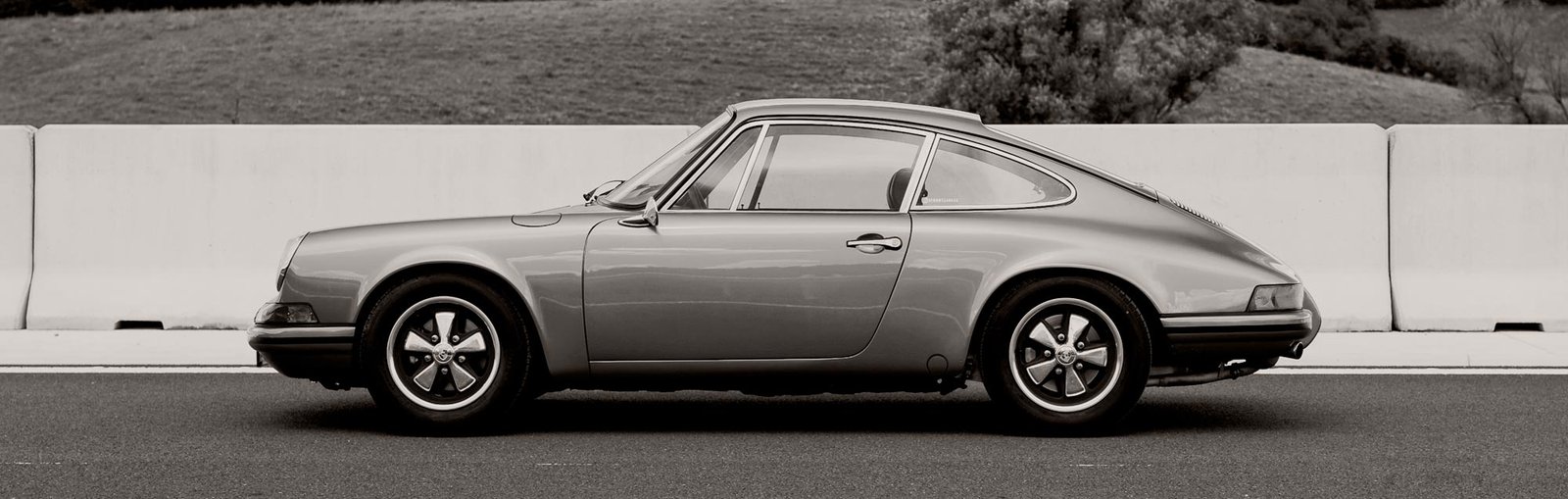
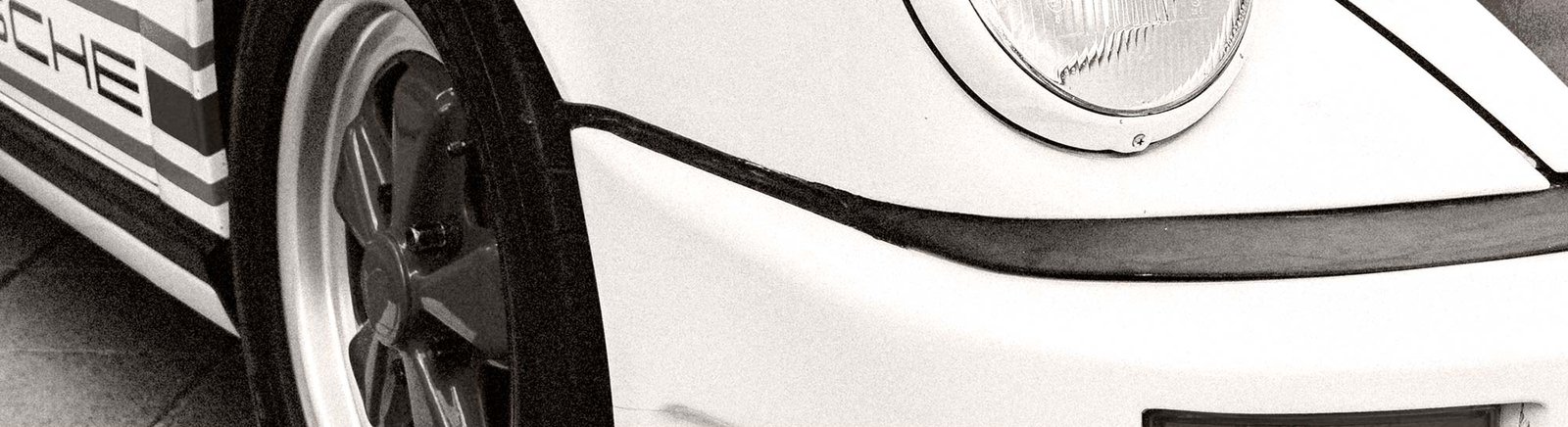
The more we explore Porsche’s history, the clearer it becomes that certain parts weren’t meant to be functional alone — they were meant to define the brand. And few components shaped the Porsche 911 as profoundly as the forged Fuchs wheel.
At THE 911 WAY, we’ve always believed that if the engine gives a 911 its voice, the wheels define its character.
And the deeper we’ve gone into the story of the Fuchs, the more obvious it becomes that this wheel didn’t just improve the 911.
It transformed it.
The early 911 and the problem with steel wheels
Early 911s rolled on stamped steel wheels. They did their job, but they weren’t exactly helping the car.
Steel wheels were heavy, slow to respond, and dulled a chassis that lived and breathed feedback.
Porsche engineers spent years fighting excess weight at the corners — every kilo there affects how the car turns, brakes, grips and communicates.
They knew that transforming the 911 required a wheel the industry didn’t yet produce.
They wanted something lighter, stronger, and more precise.
In the mid-1960s, that meant one thing:
Forged aluminium.
But no road car in the world used a forged wheel.
That was aerospace territory.
How Otto Fuchs Metallwerke helped reinvent the Porsche 911
In 1965, Porsche took a chance and approached Otto Fuchs Metallwerke, a company whose expertise came from forging aluminium for aircraft components.
Most automotive suppliers had already rejected the idea.
Forging was too expensive, too complicated, and — según ellos — unnecessary.
Otto Fuchs saw possibility where others saw problems.
Their answer was simple:
“Let’s try.”
That was the beginning of a collaboration that blended Porsche’s hunt for performance with Fuchs’ aerospace know-how — and brought Ferdinand Alexander Porsche and designer Heinrich Klie into the conversation to shape the aesthetic.
The Butzi touch: designing the Porsche 911’s iconic Fuchs wheel
The Fuchs wheel was the work of a small team:
Ferdinand Alexander “Butzi” Porsche
Designer Heinrich Klie
Fuchs forging engineers
Porsche aerodynamic and weight specialists
But the visual essence — the petal pattern, the simplicity, the balance — was undeniably Butzi.
Five “petals” weren’t chosen for beauty alone.
They balanced structural strength and visual lightness, gave the wheel a sense of motion, and felt right with the 911’s proportions.
Some designs look forced.
The Fuchs looks inevitable — as if the 911 had been waiting for it.
1967: When the Porsche 911S finally received the forged Fuchs wheel
When the 911S arrived in 1967 with the first 4.5×15 forged Fuchs, everything came together.
Test drivers noticed it immediately:
Steering sharpened.
Turn-in felt quicker.
Road contact improved.
Brake fade dropped.
Feedback became more direct.
We’ve driven enough early 911s to recognise the difference ourselves:
switching from steel to Fuchs feels like letting the car breathe properly for the first time.
The 911 suddenly becomes the 911.

Photos of the forging process: Fuchsfelge
Forging a New Kind of Porsche Wheel
Unlike cast wheels, a Fuchs wheel begins as a solid billet of aluminium. What follows is a multi-stage forging process normally reserved for aircraft components. The steps are as precise as they are brutal:
Extrusion — a solid billet is heated and extruded into a uniform cylindrical blank.
Pre-forging (upsetting) — the blank is reheated and compressed to align the metal’s internal grain.
Die forging — under massive pressure, the blank is pressed into a closed forging die, forming the hub, spokes and rim structure.
Precision forging — a second die defines the iconic five-petal design with continuous grain flow through each spoke.
Flow forming — the rim is stretched under rotation, reducing rotational mass at the outer edge.
CNC machining — bolt holes, center bore and weight pockets are cut with aerospace tolerances.
T6 heat-treating — the wheel is hardened for fatigue resistance and long-term durability.
Anodizing — the finishing layer that gives original Fuchs wheels their unmatched toughness.
The engineering goal was simple:
keep the entire wheel as one continuous piece of grain-aligned metal — no weak points, no porosity, no casting flaws.
What Porsche received wasn’t just lighter than steel.
It responded faster, stayed cooler, and could take abuse no cast wheel could survive.
How real stories shaped the legend of the Fuchs wheel
The wheel that refused to break
During durability testing in Weissach, engineers intentionally ran prototypes into potholes and kerbs at speeds that would embarrass modern warranty departments.
Steel wheels bent.
Cast wheels cracked.
Fuchs wheels?
They flexed — and survived.
One engineer famously joked:
“If something breaks, it won’t be the wheels.”
The story sounds exaggerated — until you’ve handled a set of original forged Fuchs.
Motorsport variants hidden in plain sight
For lightweight homologation cars like the 911R and ST, Otto Fuchs produced wheels with slightly thinner spokes and different profiles.
They look almost identical to standard Fuchs, but weigh noticeably less.
Collectors still study these tiny differences like archaeologists.
The american chrome mistake
In the 70s, many American Porsche owners replaced their Fuchs with big chrome wheels because they “looked more expensive”.
They had no idea they were removing one of the best-engineered components of the entire car.
Original early forged Fuchs can cost more than some classic 911s once did.
The forged Fuchs wheel that helped define Porsche
The Fuchs wheel wasn’t created to be iconic.
It became iconic because it combined engineering truth with design clarity —
and because it made the 911 drive like the car it was meant to be.
Five forged petals, one unmistakable silhouette, and a legacy that still shapes Porsche today.
And the more we learn about it,
the more convinced we are that the Fuchs didn’t just support the 911.
It helped define it.
The shape remains. Its echoes live on.
It evolves — and we keep finding new ways to honour them.
Discover how we reinterpret the iconic Fuchs silhouette through limited-edition artworks — created with the same respect for simplicity, balance and engineering purity.