Why the Porsche 911 is more than a car
— and always has been
Some cars are admired.
Some are desired.
Very few are lived.
The Porsche 911 belongs to that last category.
From the outside, it can be explained with numbers: production years, engine layouts, racing victories, generations. But none of that fully answers a simple question that every real owner — or true enthusiast — understands instinctively:
Why does the 911 mean so much?
Because the Porsche 911 has never been just a car.
It has always been a personal symbol.
A shape that refused to disappear
Most cars evolve by abandoning what came before them.
The 911 did the opposite.
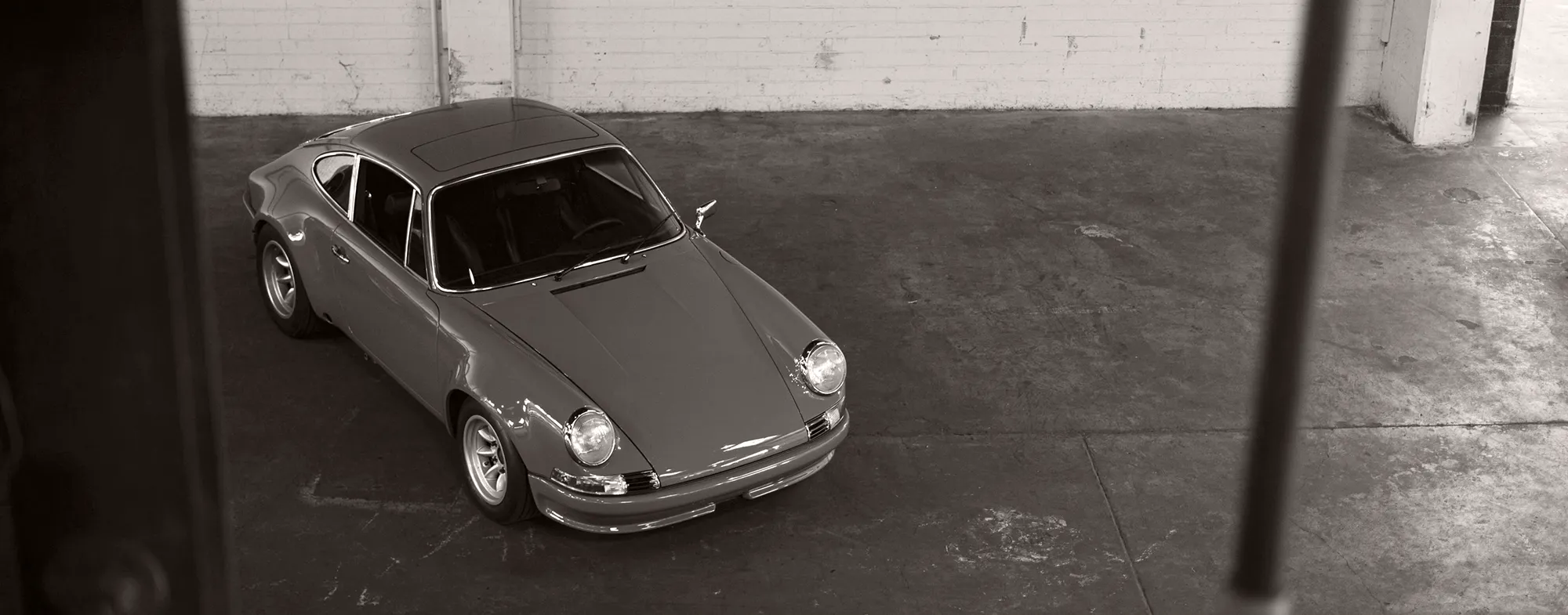
Its silhouette, introduced in the early 1960s, was never meant to become timeless. In fact, by conventional logic, it shouldn’t have survived. Rear-engine layout. Unusual proportions. An unmistakable profile that ignored trends.
And yet, decade after decade, it stayed.
Not unchanged — but unmistakable.
This continuity matters. Deeply.
For many owners, the 911 represents something rare in a disposable world: a form that doesn’t chase relevance. It simply earns it, year after year. That alone places the 911 in a different category — closer to architecture or industrial design than to consumer products.
The emotional logic of the 911
People often describe the Porsche 911 as “emotional”, but that word is usually misunderstood.
The emotion of the 911 is not loud.
It is not theatrical.
It is not about showing.
It is rooted in restraint.
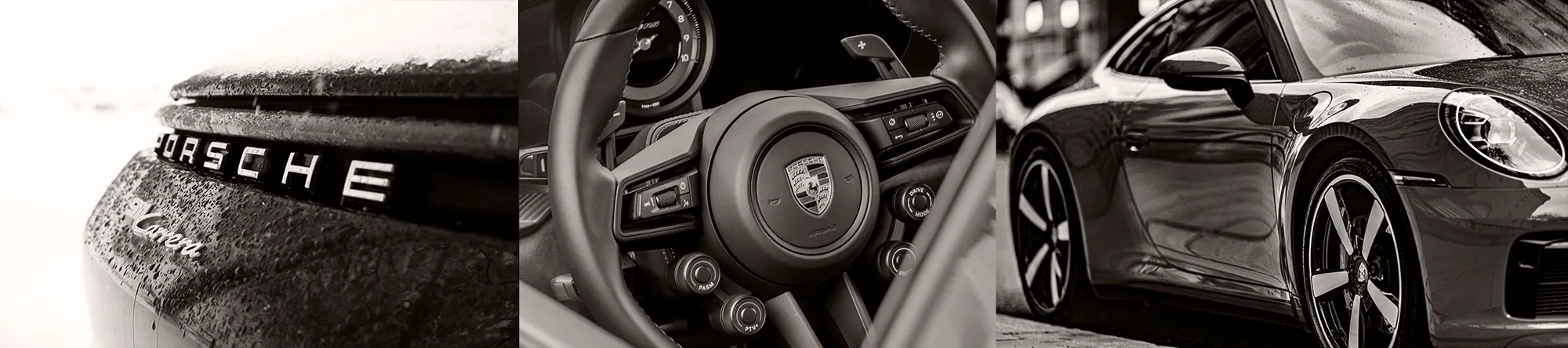
The driving position.
The view over the front wings.
The sound coming from behind you.
The sensation that the car demands attention, but rewards commitment.
This creates a relationship, not a transaction.
That is why Porsche 911 ownership rarely feels casual. Owners don’t simply “have” a 911. They remember when they got it. Why that specific generation. What it represents in their life.
In that sense, the 911 functions less like a vehicle and more like a personal milestone.
Culture, not consumption
Unlike many performance cars, the Porsche 911 has generated a culture that exists independently of marketing.
Long before social media, owners gathered.
They discussed details.
They debated generations.
They developed strong opinions — often conflicting, always passionate.
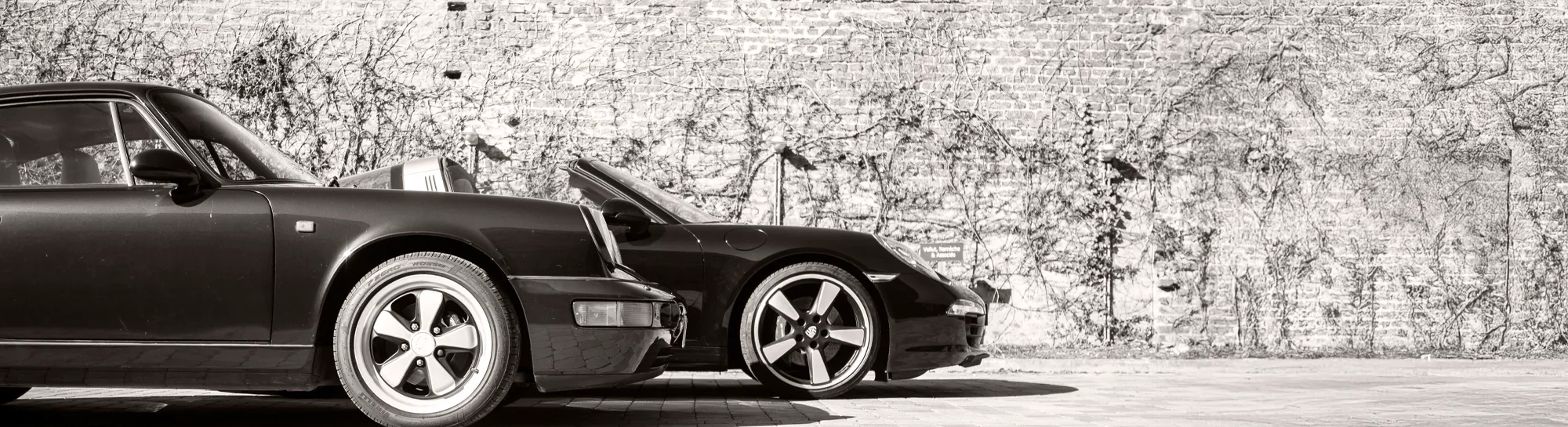
Air-cooled vs water-cooled.
Purist vs outlaw.
Originality vs reinterpretation.
This friction is not a weakness. It is proof of cultural depth.
A product that doesn’t matter does not generate disagreement.
The 911 does — because it represents values.
Precision.
Continuity.
Mechanical honesty.
And a particular European idea of performance: effective, not excessive.
Why the 911 became a personal symbol
Many objects accompany people through important phases of life. Very few become part of their identity.
The Porsche 911 often does.
For some, it is the car they promised themselves decades earlier.
For others, it marks independence, success, or return.
For many, it is tied to memory: roads driven, trips taken, mornings started earlier than necessary just to drive.
That is why owners speak about “their” 911, not “a” 911.
The model year matters.
The colour matters.
The small imperfections matter.
Because the car is not interchangeable. It carries narrative.
A design that invites projection
One of the most overlooked reasons why the 911 transcends its category lies in its design philosophy.
Ferdinand Alexander Porsche designed the original 911 with functional clarity, but also with space for interpretation. The surfaces are clean, but not cold. The lines are precise, but not aggressive.
This balance allows owners to project themselves onto the object.
A 911 can be:
understated or rebellious,
perfectly original or subtly modified,
restrained or expressive,
and still remain unmistakably a 911.
That flexibility is rare — and powerful.
From machine to meaning
Over time, the Porsche 911 crossed an invisible line.
It stopped being judged solely as a machine
and started being valued as a symbol.
Not because Porsche pushed it there, but because the community carried it.
Today, the 911 exists simultaneously as:
a sports car,
a design icon,
a cultural artefact,
a personal statement.
Very few objects manage that without losing credibility. The 911 never did.
Why this matters beyond the car itself
Understanding the Porsche 911 as more than a car explains many things that otherwise seem irrational.
Why owners obsess over details no one else notices.
Why garages become curated spaces rather than storage rooms.
Why objects related to the 911 — parts, tools, images — are treated with reverence.
And why generic representations of the 911 often feel hollow.
When something carries meaning, it demands respect.
Always more than a car
The Porsche 911 did not become “more than a car” recently.
It didn’t need rebranding.
It didn’t need nostalgia campaigns.
It has always been more than a car — because it was never designed to shout, impress or follow.
It was designed to endure.
And endurance, when combined with emotion and restraint, creates something rare:
an object that becomes part of who you are.