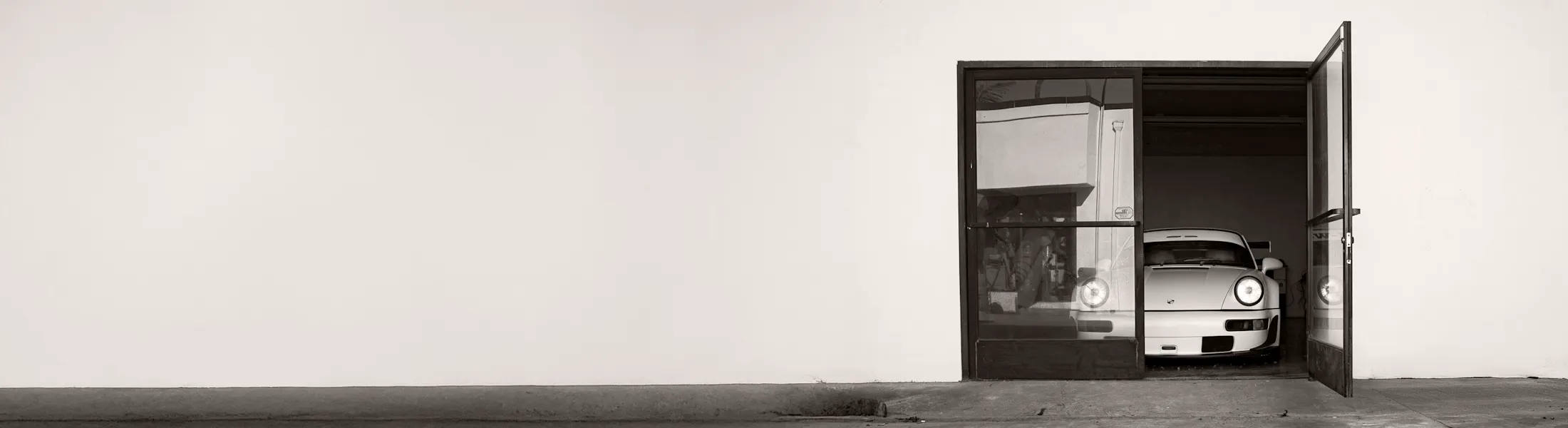
The garage as a sanctuary:
how Porsche 911 owners really use the space
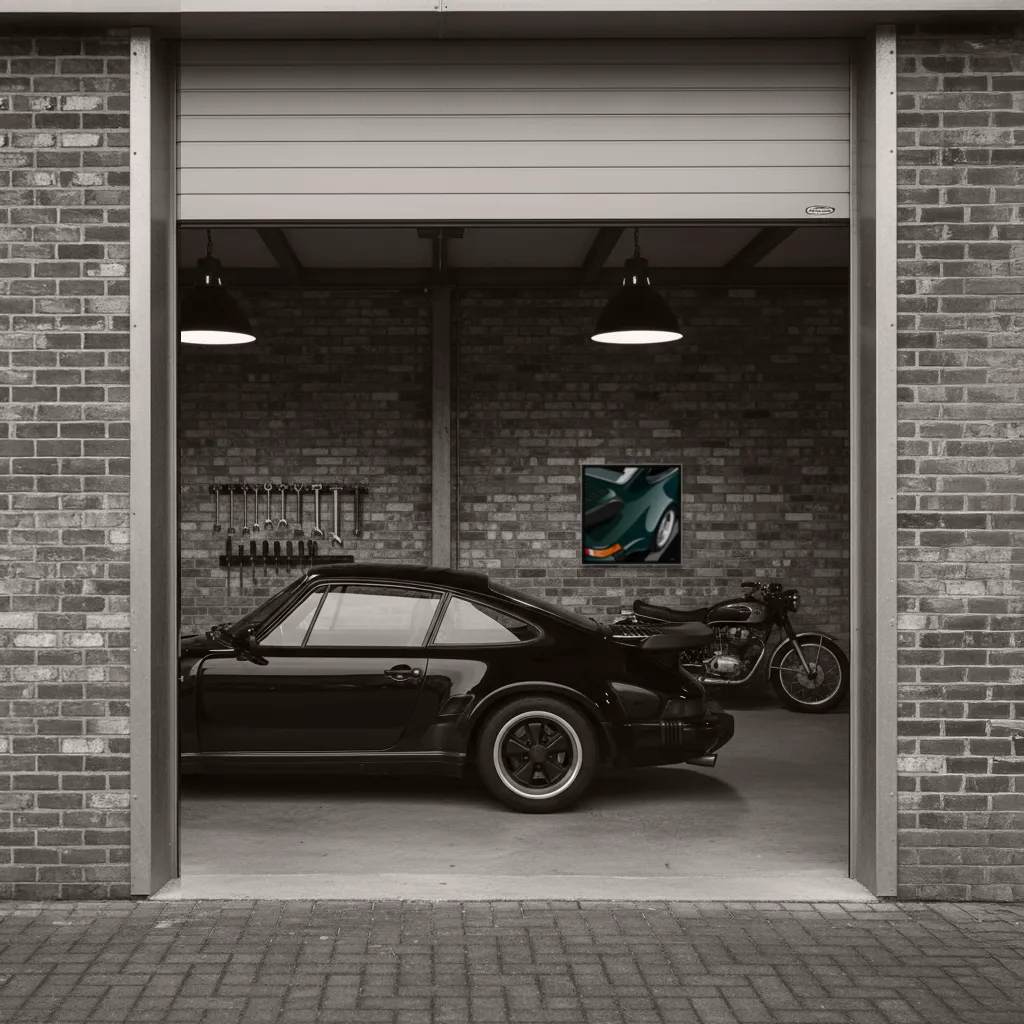
A garage is not supposed to be beautiful.
It is supposed to be useful.
And yet, for many Porsche 911 owners, the garage becomes something else entirely.
Not a showroom.
Not a storage room.
A sanctuary.
A place where the outside world stays out, and the relationship with the car is allowed to exist quietly, without explanation.
More than a place to park
For someone who simply owns a car, the garage is a practical necessity.
For someone who lives with a 911, it becomes part of the experience.
This is where:
-drives begin before anyone else is awake
-routes are planned without urgency
-details are noticed in silence
The garage is the only space where the 911 is not judged, compared, or contextualised.
It simply is.
That is why owners often speak about their garage with the same precision they use when describing their car.
Because it is not neutral space.
It carries intention.
The quiet ritual of arrival
There is a moment every 911 owner knows.
The engine is turned off.
The door closes.
The sound disappears.
What remains is presence.
The smell of warm metal.
The ticking as components cool.
The light falling across familiar shapes.
This ritual is not accidental. It is repeated, almost unconsciously, because it marks the transition between movement and stillness.
And the garage is the only place where that transition feels complete.
Why garages evolve differently for 911 owners
Spend time around Porsche 911 owners and a pattern emerges.
Their garages are rarely chaotic.
Rarely overloaded.
Rarely decorated without thought.
Instead, they tend to be restrained, functional, deliberately incomplete.
Everything inside has a reason to be there.
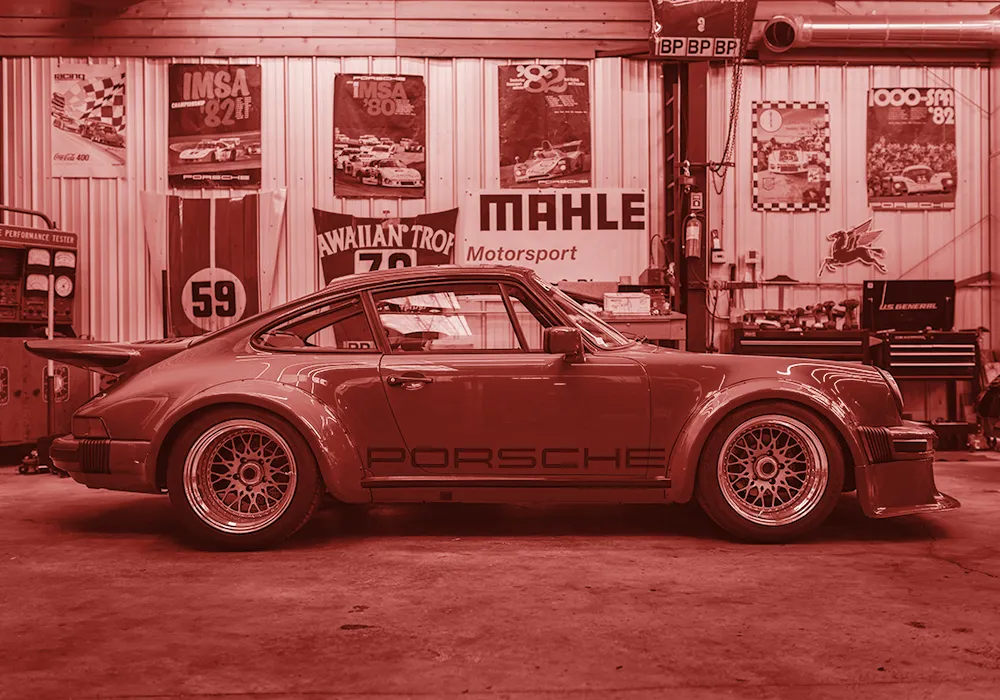
Tools are chosen, not accumulated.
Objects are kept because they mean something, not because they fill space.
This approach mirrors the philosophy of the 911 itself:
nothing unnecessary, nothing excessive.
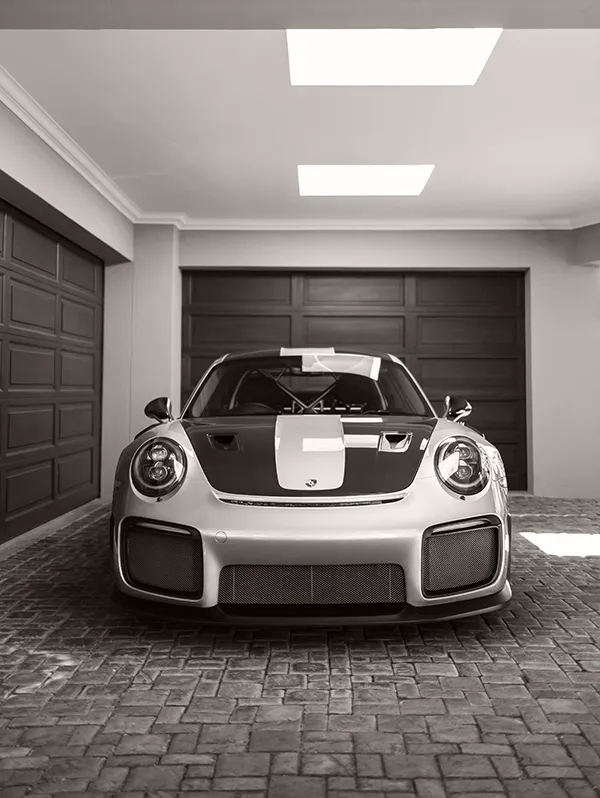
Storage versus presence
Most garages are designed for storage.
911 garages are designed for presence.
The car is not hidden.
It is positioned.
Often slightly off-centre.
Often angled.
Often left exactly where the light hits it best in the morning.
This is not vanity. It is awareness.
Owners are not trying to display the car to others.
They are creating a space where they themselves can connect with it.
That distinction matters.
The garage as a personal space
Unlike a living room or an office, the garage rarely needs to impress anyone.
Which is precisely why it becomes honest.
There is no pressure to conform to trends.
No need to justify choices.
No audience.
This freedom allows the garage to reflect something deeply personal: the owner’s relationship with the car, not their taste as seen by others.
That is why garages often feel more authentic than any other room in the house.
Objects that belong there
Because the garage is a sanctuary, not everything is allowed in.
Generic decoration feels out of place.
Mass-produced imagery feels disconnected.
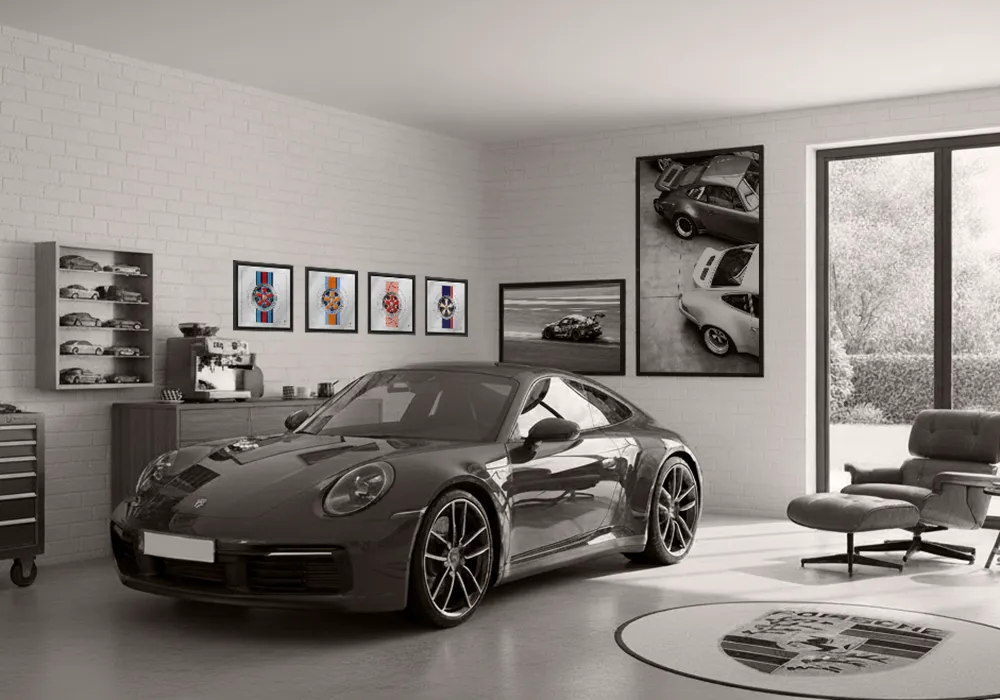
What belongs in a 911 garage are objects that share the same values as the car itself: precision, restraint, permanence.
Objects that do not shout for attention, but reward time spent with them.
This is why owners are selective.
And why they instinctively reject anything that feels superficial.
A European relationship with space
In Europe, garages tend to be smaller, more contained, more intentional.
This limitation often results in better decisions.
Instead of filling space, owners curate it.
Instead of spectacle, they choose meaning.
This aligns naturally with the European understanding of luxury:
not excess, but control.
The garage becomes a controlled environment — not in temperature or humidity, but in purpose.
Why the garage matters more than the living room
Living rooms are shared.
Garages are chosen.
A living room reflects compromise.
A garage reflects conviction.
This is why many Porsche 911 owners feel more connected to their car in the garage than on the road. The road is transient. The garage is constant.
It is where memory accumulates.
And that makes it the most honest place for anything associated with the 911.
A space that doesn’t need explaining
The garage does not need visitors.
It does not need approval.
It does not need validation.
It exists for one person — and the object they understand better than most.
In that sense, the garage is not just where the Porsche 911 lives.
It is where the relationship does.